Template
Cosmetic Batch Record Template
A batch record helps connect what you made, when you made it, which ingredients and packaging lots you used, and which labels went on the finished product.
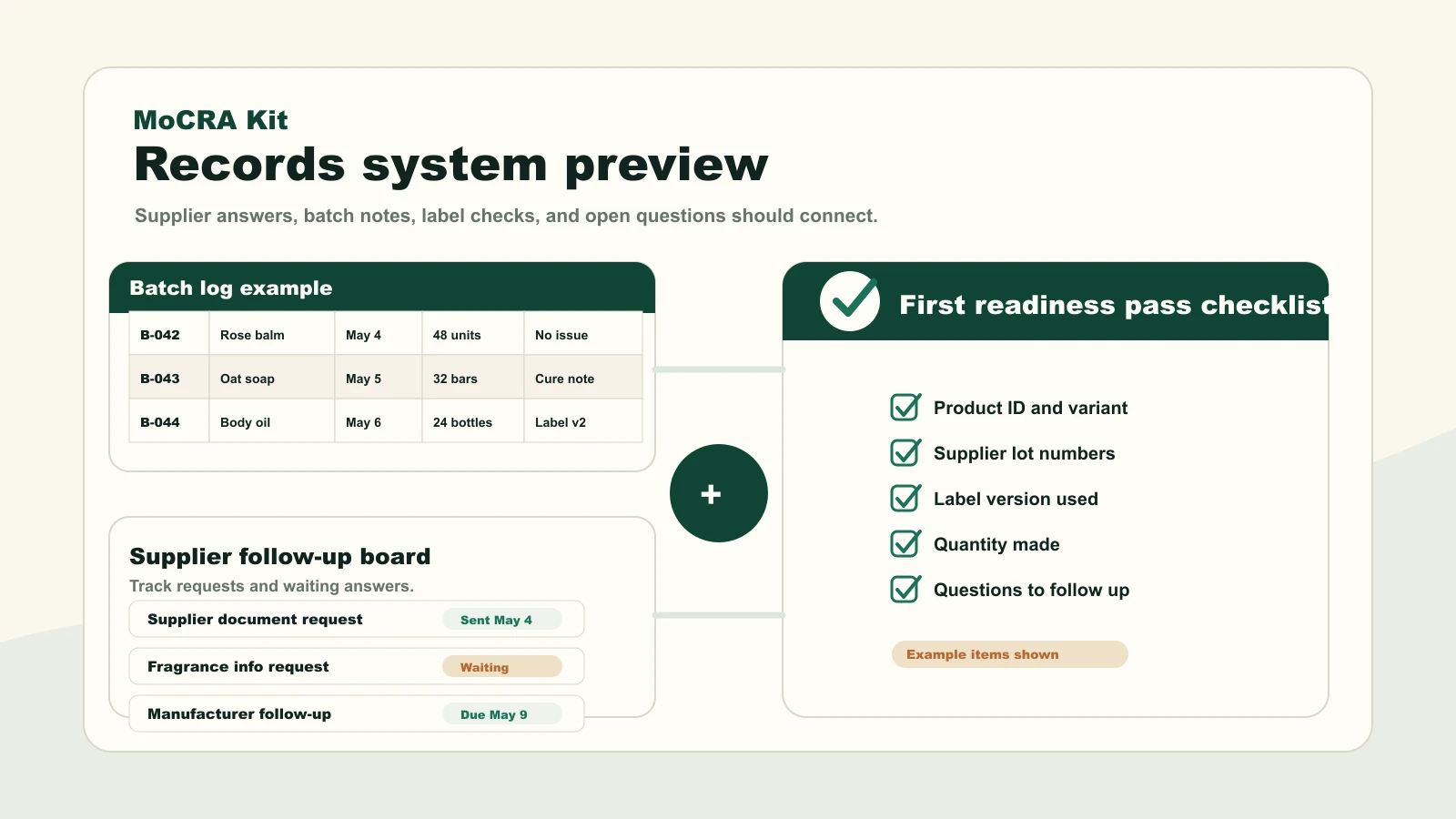
Supplier name, ingredient code, lot number, COA status, and quantity used.
Batch ID, date, maker, process notes, deviations, and yield.
Units filled, label version, packaging lot, storage, and release decision.
Channels, shipped units, customer complaints, adverse-event intake, and recall notes.
Fields to include
- Batch ID or lot code
- Product ID and product name
- Date made and person responsible
- Formula or recipe reference
- Ingredients used and supplier lot numbers
- Packaging components and packaging lot numbers
- Quantity made, quantity filled, and rejected units
- Equipment used and cleaning notes
- Process notes, temperatures, weights, timing, and deviations
- Label version used
- Quality checks and release decision
- Storage location and sales channels
Why it matters
Batch records help small sellers answer practical questions quickly: Which products used this ingredient lot? Which label version was used? Which customers may have received units from this batch? What changed from the prior batch?
Even if a legal requirement is unclear for your exact business, batch records are useful business infrastructure.
Batch record example structure
| Section | Example fields | Review value |
|---|---|---|
| Product identity | Product ID, name, variant, formula version | Prevents mixing up similar products or scents. |
| Production details | Date, maker, equipment, quantity, process notes | Shows what happened during the production run. |
| Materials | Ingredient lots, packaging lots, supplier references | Supports traceability if a supplier issue appears later. |
| Release | Checks completed, label version, stored location, release decision | Connects quality review to finished units. |
| After sale | Sales channel, complaint ID, adverse-event intake link | Helps investigate issues after units are sold. |
Lot codes should be boring and consistent
A lot code does not need to be clever. It needs to be consistent enough that you can trace a finished unit back to the product, production date, and batch record. Many small sellers use a simple pattern such as product abbreviation plus date plus run number. The exact format matters less than using it every time.
Whatever pattern you choose, document it in the workbook. If a customer sends a photo of a label, you should be able to identify the product batch without searching through notebooks, inboxes, and marketplace orders.
Common mistakes
- Using the same lot code for multiple unrelated products.
- Recording the recipe but not supplier lot numbers.
- Changing a label without recording which batch used it.
- Keeping batch notes in a notebook without tying them to product SKUs.
How to make this template easier to maintain
- Use a product ID dropdown tied to your product tracker.
- Use required fields for batch ID, date, product, label version, and quantity made.
- Use conditional formatting for missing supplier lot numbers.
- Keep deviations as free text, not a yes/no field only.
- Store a link or file path to supporting documents, photos, or printed batch sheets.